

Introduction
Most businesses file VAT returns every quarter. After a few years, it can start to feel routine. But 2026 brought real changes to UAE VAT law, the penalty system, and the way invoices will soon be issued. VAT return filing in Dubai now needs closer attention than before, especially for businesses that still rely on spreadsheets and last-minute work. A wrong figure in one box can lead to penalties, lost input tax, or questions from the Federal Tax Authority. This guide explains what changed, where businesses make mistakes, and how to file every return with confidence.
The Basics: When and How VAT Returns Are Filed
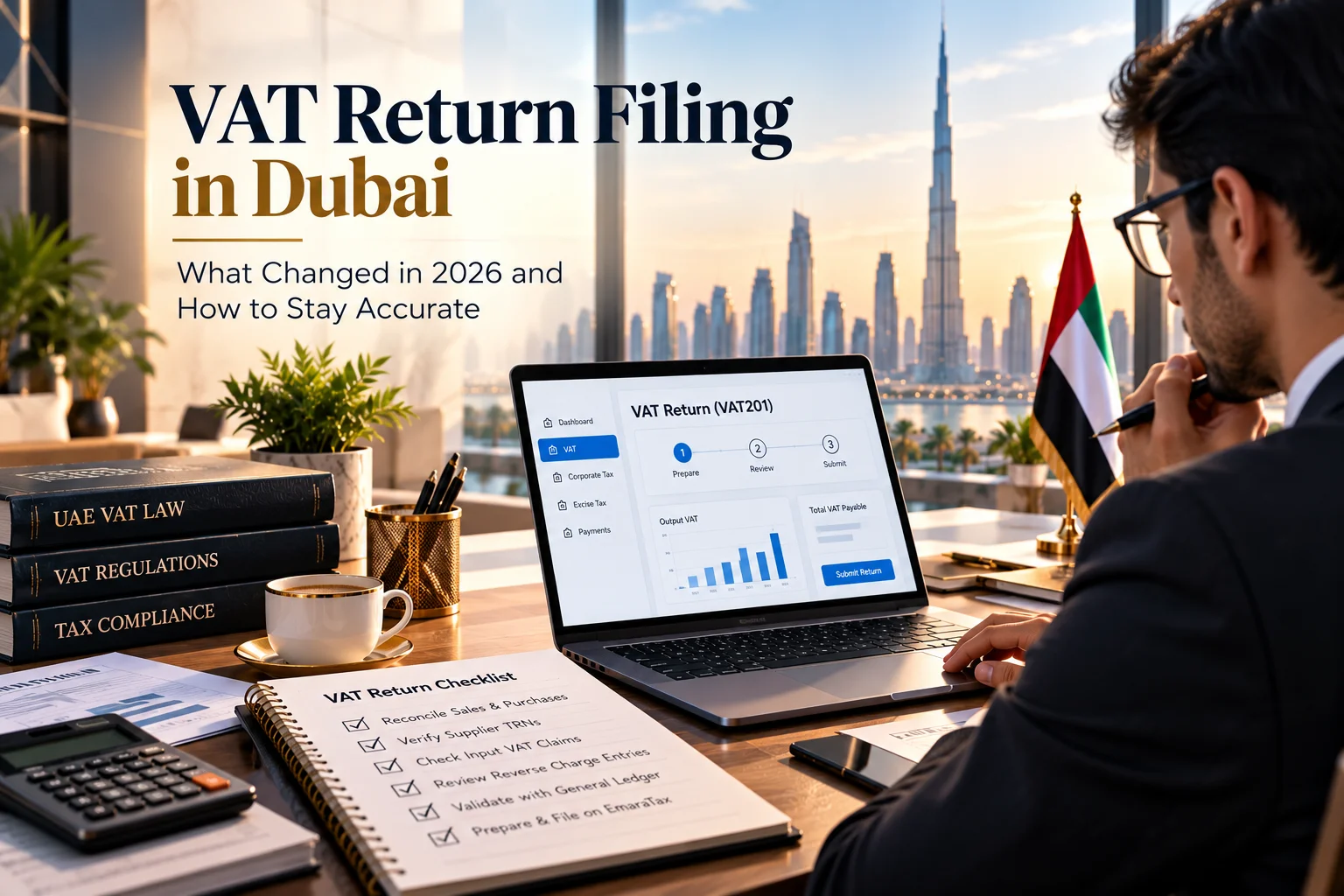
A VAT return is filed on the EmaraTax portal using form VAT201. Most businesses file quarterly, while some larger businesses file monthly. The return and any VAT payable are due within 28 days after the end of each tax period.
Each return reports:
- Output VAT charged on sales, split by emirate
- Zero-rated and exempt supplies
- Imports and reverse charge transactions
- Input VAT recovered on purchases and expenses
Every figure must come from your accounting records. It must also be supported by valid tax invoices. If the numbers in your books and your return do not match, problems start.
Your tax periods are set by the FTA when you register, so not every business files at the same time. One company may have a quarter ending in October, with a return due by 28 November. Another may close its quarter in November or December. Check your own tax period dates on EmaraTax and add each deadline to your calendar at the start of the year.
What Changed in UAE VAT in 2026
Several amendments to the VAT law took effect on 1 January 2026. Three of them directly affect how you file.
No more self-invoicing for reverse charge
Before 2026, businesses had to issue self-invoices for reverse charge supplies, such as services bought from overseas. This requirement has been removed. Instead, you must keep the supplier’s invoice and related import documents. Your return must still report the reverse charge correctly.
A five-year limit on excess refundable VAT
Excess input VAT credits can no longer sit on your account forever. Claims for refundable excess VAT now have a five-year limit from the end of the relevant tax period. There is a transition window for older credits, with claims for older balances due by 31 December 2026. If your returns show a credit balance year after year, now is the time to act.
Stronger rules against tax evasion
The FTA can now deny input VAT if a purchase was part of a tax evasion arrangement and the buyer knew, or should have known, about it. In practice, this means you need to check your suppliers. A valid TRN and a real business relationship matter.
The New Penalty Regime
From 14 April 2026, late payment penalties changed to a simple charge of 14% per year on unpaid tax, calculated monthly. Penalties for voluntary disclosures also fell to 1% per month. This makes it far cheaper to correct your own errors early than to wait for the FTA to find them. Penalties for errors discovered by the FTA are higher, so regular internal checks are worth the effort.
Common Mistakes in VAT Return Filing in Dubai
Most VAT errors are small and avoidable. The most common ones include:
- Claiming input VAT on blocked items, such as staff entertainment or some vehicle costs
- Claiming input VAT without a valid tax invoice
- Reporting sales in the wrong emirate
- Missing reverse charge entries on imported services
- Recording a credit note in the wrong period
- Treating exempt supplies as zero-rated, or the other way around
Each error looks minor. But repeated across many invoices, they can change your VAT position significantly and create exposure during an audit.
Related Blog Post : What is VAT and How to Get a Refund?
A Simple Process for Accurate Returns
Good VAT returns come from good monthly habits, not a rush in the final week. A practical process looks like this:
- Reconcile your sales and purchase ledgers every month
- Review new suppliers and confirm their TRNs
- Check that every input VAT claim has a valid invoice
- Compare VAT reported with your general ledger before you submit
- Keep a file of supporting documents for each return
It also helps to have a second person review the return before it is submitted. A fresh pair of eyes often spots a missing import entry or a credit note in the wrong period. If you find an error in a past return, decide quickly whether it can be corrected in the next return or needs a voluntary disclosure, depending on the amount involved.
Businesses preparing for e-invoicing should also review their invoice data now. Large businesses go live with e-invoicing on 1 January 2027, and smaller businesses follow in July 2027. Clean invoice data today will make that change much smoother.

Conclusion
The 2026 changes make accuracy more important than speed. New reverse charge rules, a five-year limit on refundable credits, and a reformed penalty system all reward businesses that keep clean records and review their returns carefully. Getting VAT return filing in Dubai right each quarter protects your cash flow and keeps you out of trouble with the FTA. M&M Auditing helps businesses prepare, review, and submit accurate VAT returns, and fix past errors before they become costly.